

Sports Team's third album is, as their frontman Alex Rice puts it, about how strange it is "to be confronted by videos of music, war, six political narratives and a talking fox in the first minute after you wake up". It's about the now — sometimes a celebration, often a critique, touching on everything from social media to our obsession with nostalgia. But while the subject matter of Boys These Days might be a zeitgeisty little melting pot of contemporary culture, their ethos as a band is anything but.
The six piece — lead vocalist Rice, rhythm guitarist and vocalist Rob Knaggs, lead guitarist Henry Young, bassist Oli Dewdney, drummer Al Greenwood and keyboardist Ben Mack — have made a name for themselves by doing things in a decidedly pre-Instagram way. Taking fans to the pub after gigs. Popping up at unexpected venues, which has earned them comparisons to bands like The Libertines. Concerts at unassuming (and perhaps a bit shit) nightclubs like Fusion. That's where they did one of their first gigs, actually. "There were two lads who'd clearly got off work early, drinking Jägerbombs," Rice recalls.
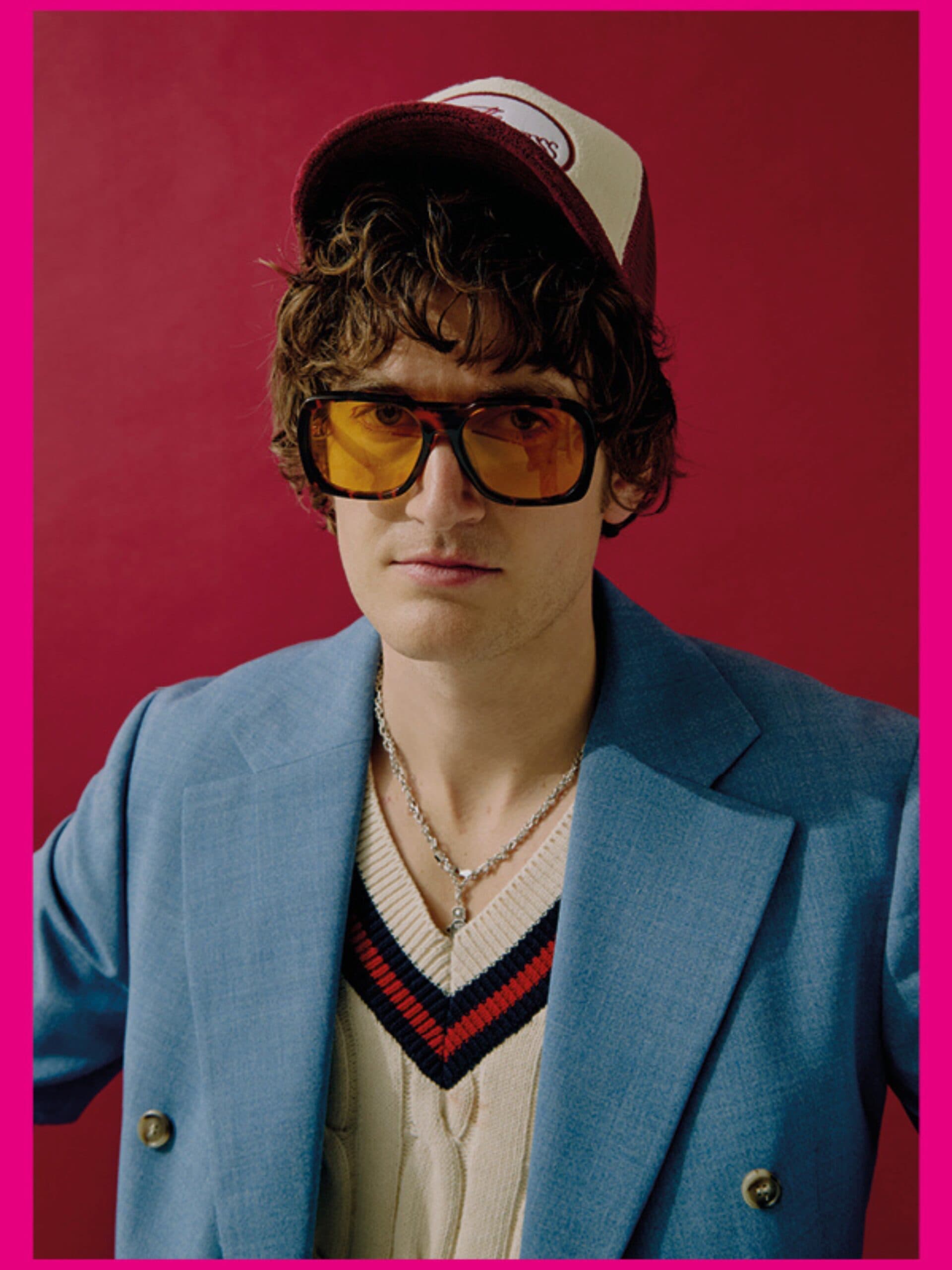
Haven't heard of Fusion? I'm not surprised. That only came up because Rice, like me, is from Tunbridge Wells, Kent. It doesn't come as a shock to hear that Sports Team (who, bar Dewdney, formed while at Cambridge University) are from my neck of the woods. Their "thing" isn't just their live performances but their ability to tap into what I've come to call commuterbeltcore. They've got that appreciation for middle England — Alan Partridge-esque motifs like the M5 and mock-Tudor houses — that only people not from a major metropolitan city can fathom.
That has changed a bit three albums down the line — their new single, Bang Bang Bang, is based on the time they were robbed at gunpoint in California. Still, no matter how "big" the subject matter is, Sports Team will approach it in the idiosyncratic way that makes them them. "Mickey Mouse, AR-15s, SeaWorld, fentanyl," Rice, 31, reels off when our chat turns to America, for example.
Cannibalising the aspects of a privileged existence does attract some obvious criticism, but at least Sports Team aren't pretending to be something they're not. And it's working. Deep Down Happy, their 2020 debut album, reached number two in the UK charts and number one in Scotland. They're no stranger to sold-out tours. They even got nominated for a little something called the Mercury prize that same year. It's the kind of success that would make some bands evolve beyond their roots, but I've got no doubt Sports Team would traipse back through the sticky floors of Fusion for some kind of anniversary gig. Granted, it has now shut down, but Rice and his comrades would probably find some kind of semi-ironic way around that.
Amber Rawlings: You had 50 different directions this album could have gone in — sci-fi, electro-clash, etc. How did you land on making a record about modern life's chaos?
Alex Rice: Soundwise, this was the first album we've made where it felt like those choices were available to us. To be honest, it's the first time we've gone in and felt really confident with what you can do in a studio — to be able to experiment a bit. We had a lot more sounds to draw on. Thematically, though, I think the chaos of how you experience the world is so in your face at the moment, especially if you're trying to get your music out on socials. It's so unique to our generation to be confronted by videos of music, war, six political narratives and a talking fox in the first minute after you wake up. The album is trying to work out how that affects your mind.
Amber: You've said you're happier with your vocals on this record. What do you think has shifted?
Alex: The production process was quite different for this one. On our first two albums, we worked with a producer who was brilliant at capturing a really pure, live sound. Matias Tellez, who we worked on this record with, is in more of a pop place. He was happy to autotune later on and just told me to give every take as much energy as I could. That's exactly what I needed.
Amber: I'm in Love (Subaru) starts as a love song but becomes something darker. Is that how modern romance feels to you?
Alex: Subaru is the album opener and it's supposed to paint this quite naive picture of romance — like when you're 11 years old and the thing you love the most is a rally car you've seen Colin McRae drive. It's a song that takes that as something really pure and brilliant. In a way, the album is a journey into the jadedness of the last song, Maybe When We're 30.
Amber: You've talked of this being an album about how we just scroll through "porn, tragedy, war, violence" every morning. Was it similarly exhausting to make?
Alex: Not really. We recorded in Bergen, Norway, so there was a good Scandinavian work ethic around it. I've never had a studio experience where you finish at 4pm. That could well be just what they told me before I'd be working late into the night trying to get vocals in tune. Honestly though, Bergen? Great place. Lots of huge hikes in the snowy mountains and lapskaus [a traditional Norwegian stew].
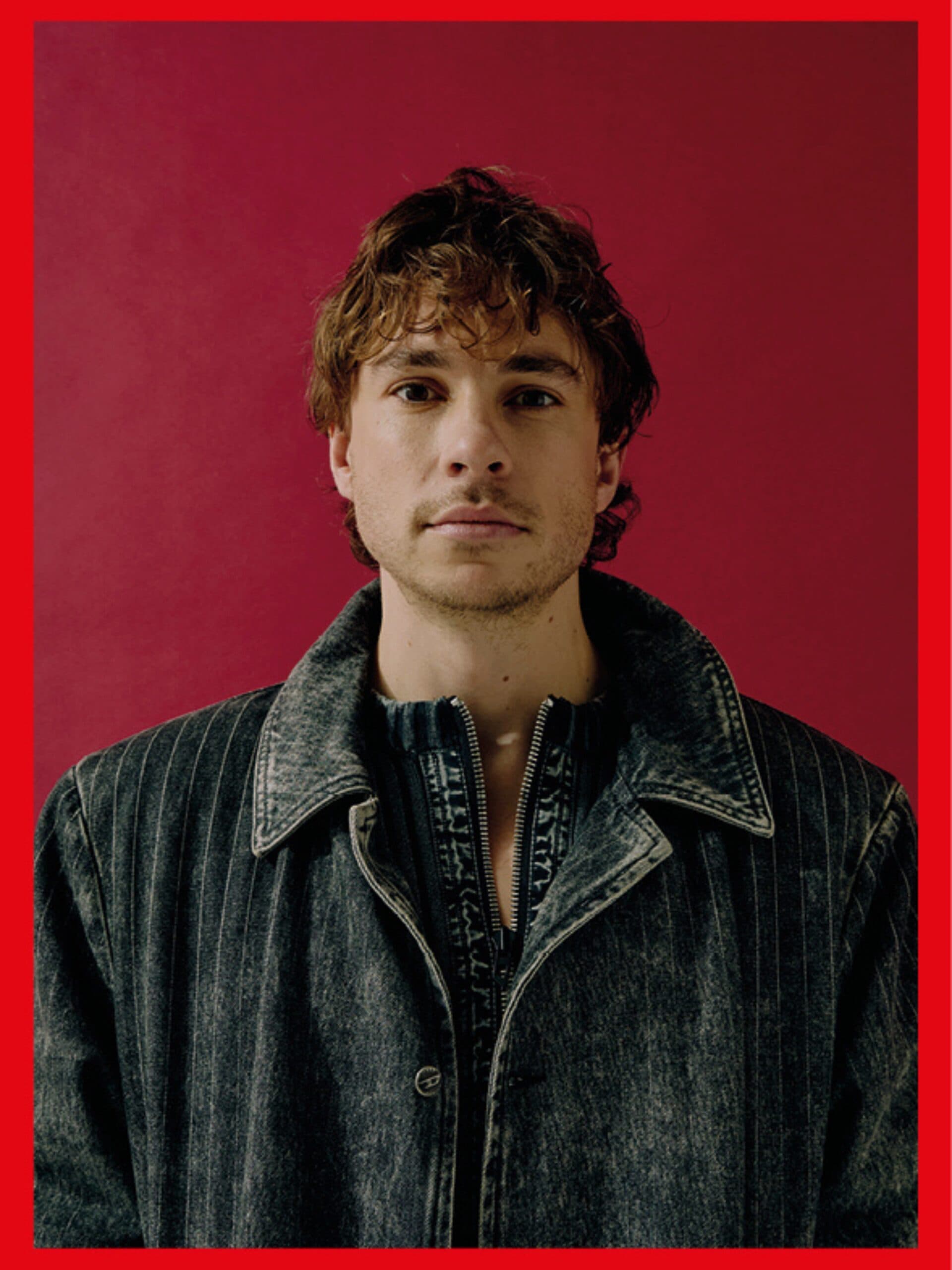
Amber: You've said you've got one of the youngest crowds in guitar music. What do you think keeps that connection alive?
Alex: I reckon it's because there's such a sense of community around the band. If you're a young person in the UK, a lot of those places where you find a sense of common purpose have been stripped away from you. But music can still do that. I think it's also the fact that we're prepared to make being in a band seem fun. The whole sunglasses-inside, pouting and calling yourself a poet [thing] has never really appealed to us. I appreciate that I'm in quite a fetching bonnet in this shoot, though.
Amber: That line about the moon being "just a great big strip mine" in Sensible [from the new album] — is cynicism inevitable when making art now?
Alex: I don't think it's inevitable. And I don't think anything we're encountering politically or culturally at the moment is particularly unique in history. America is Rome at the moment. But it is so within the English tradition to make grand gestures and earnestness look faintly ridiculous — we've always found that powerful as a way of doing politics in our songs.
Amber: It's something of a thread to the album, but for those not in the know, tell us a bit about Bang Bang Bang — and why it's so pertinent after what happened to you in San Francisco?
Alex: Yeah, it was a strange experience, that one. We've been to the US a lot now and have always found how prevalent guns are to be a disconcerting thing. But actually having a weapon pulled on you and then seeing all the support from the community made us feel very centred in it. You can feel the politics in it when doing interviews about the experience, especially in California. Fox News pulled our segment after we shared a donation link to [the gun control non-profit] Everytown. But I suppose Bang Bang Bang is about how interwoven guns are in American society. We've been at bars where people have wanted to show us their guns and we've seen shooting equipment in the same aisle as children's toys [in supermarkets]. America is so full of contrasts — it's like Mickey Mouse, AR-15s, SeaWorld, fentanyl. It's such a vivid and brilliant country and I think they can do better than this.
Amber: You're releasing vinyl and cassettes in 2025. Is there something powerful about physical objects in this digital chaos?
Alex: For sure. We try to make anything physical we offer feel personal and have enough Easter eggs hidden within it to make it worth buying. Ben painted the artwork for this latest album, but in the past vinyls have come with zines, lyrics, artwork and recordings of Oli's mum on the phone. They always feel a bit all over the place, but they're something that connects us to fans.
Amber: Boys These Days is a reference to these nostalgia-centric, somewhat meaningless Facebook groups. It's such a specific reference point but somehow everyone knows exactly what you mean. Was that the point? That we're all unknowingly fluent in this weird online language?
Alex: Yeah, there's a specific phrase we remember hearing. Someone was getting people to "remember proper binmen". We're fascinated by how you get into that psyche, and the title track is a kind of overblown journey exploring that.
Amber: What's the perfect venue to play this album? I think it's got to be somewhere semi-ironic and, perhaps, verging on awful. I know that, like me, you're from Tunbridge Wells, so maybe one of our wonderful local nightclubs?
Alex: We actually played one of our first gigs at Fusion there. We've always wanted to do shows in odd places and some of them work out like magic. This one did not. There were two lads who'd clearly got off work early, drinking Jägerbombs. They couldn't have been more confused.
PHOTOGRAPHER Joshua Peroti
STYLIST Adele Cany
WRITER Amber Rawlings
MAKE-UP ARTIST Eliza Clarke at Stella Creative Artists using NARS
HAIR STYLIST Lewis Pallett at Eighteen Management using GHD and SCHWARZKOPF PROFESSIONAL PROP STYLIST Vicky Lees PHOTOGRAPHER’S ASSISTANT Lucy Phillip STYLIST’S ASSISTANTS Macy Richards, Joseph Towne


